
Neuropathy Relief in Dumont
Peripheral neuropathy has many causes, and honesty matters here: our role is the mechanical and spinal side, working alongside the medical care that manages the underlying cause.
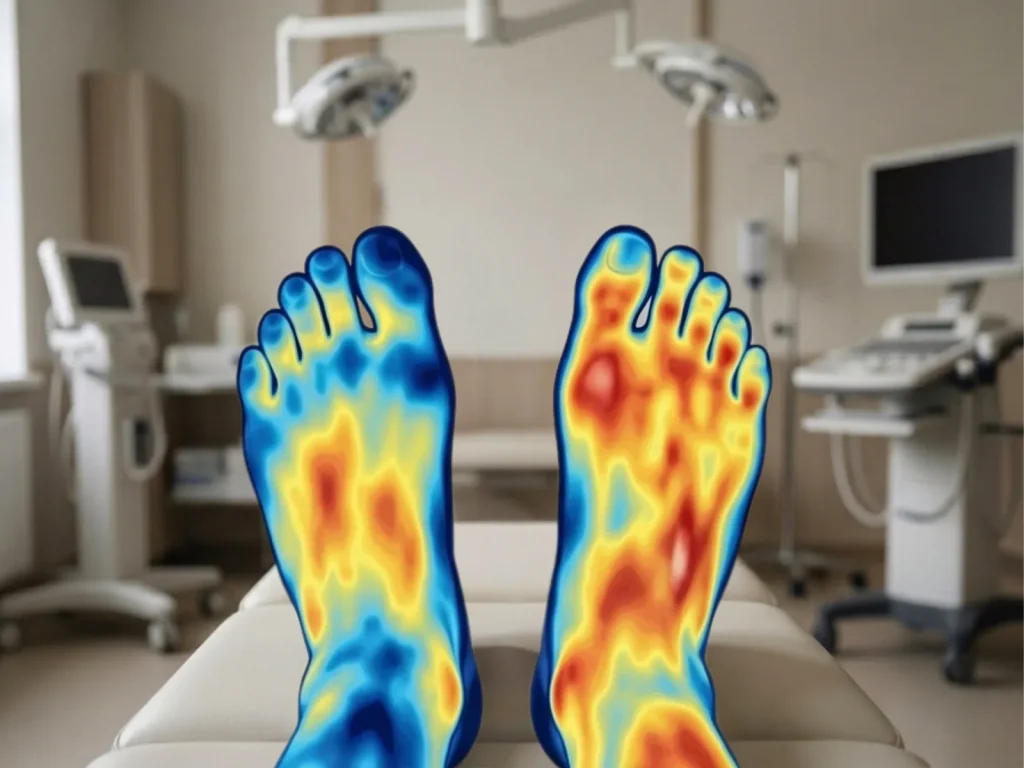
Peripheral neuropathy causes numbness, tingling, burning, or weakness, usually in the hands and feet, and it is a condition we care for. We use a range of modalities aimed at the mechanical and spinal factors that contribute to it, and the goal is real improvement in both symptoms and day-to-day function. What we will not promise is a long-term cure, because there is not one. The people who do best are the ones who stay consistent with what we teach them.
Here is the straight version: what peripheral neuropathy is, what our assessment actually looks at, where this care fits alongside your medical team, and what to expect from it.
What is peripheral neuropathy?
It is damage or dysfunction in the peripheral nerves, the ones that carry signals between your spinal cord and the rest of your body. When they are affected, you feel it as numbness, tingling, burning, or weakness, most often in the feet and hands. It has many causes, and the most common by far is diabetes; others include injury, certain medications, and nerve compression.
Because the causes are so varied, the single most useful thing is an accurate picture of what is driving yours. Some of that is squarely medical and belongs with your doctor. A part of it, sometimes, is mechanical.
Where chiropractic care fits with neuropathy
Where this care earns its place is the mechanical side. If a nerve is compressed or irritated where it exits the spine, or if joint and muscle problems are adding to what you feel in your hands and feet, that part is workable, and it is what we assess for and work on. What it does not do is repair damaged nerves or resolve a systemic cause such as diabetes; that stays with your medical team, and we work alongside them.
The first visit is a detailed evaluation of the quality of neurological function in the extremities, together with an assessment of spinal function to detect any spinal complications contributing to it. From that you get a clear picture:
- A careful assessment of whether a spinal or mechanical factor is contributing to your symptoms.
- Hands-on care for any nerve-compression or joint-and-muscle component we find.
- Movement and practical guidance to reduce mechanical load on an irritated nerve.
- Coordination with the doctor managing the underlying cause, and a referral when that is the right call.
If your neuropathy is entirely medical, we will tell you that a chiropractor is not the answer to it, and point you to who is.
Neuropathy by the numbers
These are the figures this practice publishes about how common neuropathy is and how it is usually managed.
- Peripheral neuropathy affects nearly 46.5 million Americans.
- Approximately 150,000 patients per year have amputations due to neuropathy.
- It is estimated that 60 to 70 percent of diabetics suffer from peripheral neuropathy.
- 30 to 40 percent of all cancer patients have chemotherapy-induced peripheral neuropathy.
- 90 percent of neuropathy sufferers depend on medications or injections to manage their symptoms.
- Falls and hip fractures caused by the balance problems that come with neuropathy are rising.
- No referral needed to book a first assessment.
- We go over the costs with you before anything begins, so you know what to expect.
- An honest read on whether there is a mechanical component, and a referral when there is not.
We cannot promise a specific outcome, and we will not promise to cure neuropathy, because that is not what this care does. Neuropathy care here is a complement to the medical management of its underlying cause, never a replacement for it.
About 13.5% of U.S. adults aged 40 and older have peripheral neuropathy, according to national survey data reported through the U.S. National Library of Medicine, and the share is far higher among people with diabetes. It is common, its causes are mostly medical, and an honest assessment is the right first step.
Source: Peripheral Neuropathy and All-Cause and Cardiovascular Mortality in US Adults, via the U.S. National Library of Medicine (PubMed Central). pmc.ncbi.nlm.nih.gov
Neuropathy Relief is available at our Dumont clinic, conveniently located at 24 Grant Ave. We see patients from across Dumont · Haworth · New Milford · Bergenfield · Cresskill · Demarest · Oradell · Closter · Emerson. Learn more about our Dumont practice and the full range of care we provide.
Areas We Serve
The benefits of Neuropathy Relief in Dumont
An honest boundary, stated up front
The mechanical and spinal side
An accurate picture of what is driving yours
What to expect at our Dumont clinic
An assessment, not a course of care
Sorting the mechanical from the medical
A straight answer
Working alongside your doctor
What patients say
“The doctors, the staff the entire team is exceptional! I highly recommend the back care center! Is a place where you walk in and you feel like at home they truly care about your health and well-being, if anyone has back issues please come here ! AMAZING I HAVE NO MORE PAIN !! THANK YOU!”
“I’ve had an excellent experience at The Back Center. I first came in with significant pain and several complications, but after just a couple of months, I’m feeling so much better and my back has improved tremendously. Dr. Schwartz is truly amazing—he takes his time to explain everything clearly and always makes sure I fully understand my treatment. I’m very grateful for the care I’ve received!”
“The staff is very friendly and knowledgeable. The doctors take their time assessing you and thoroughly inform you of their findings. My shoulder was bothering me since the spring. I started seeing Dr. Schwartz at the end of August and I’ve seen a huge improvement. Almost back to normal.”
Neuropathy Relief FAQ: Dumont
Honestly, no. Chiropractic care does not repair damaged nerves or resolve a medical cause like diabetes, and we will not claim it does. Where the assessment finds a mechanical or nerve-compression component adding to your symptoms, we can work on that part. For the underlying cause, your doctor leads and we coordinate.
For an honest assessment. Some neuropathy symptoms have a mechanical component, a nerve irritated or compressed along its path, that is workable, and some do not. A careful look tells you which, and either points to something we can genuinely help with or confirms that this belongs with your medical team.
Diabetes is the most common cause of peripheral neuropathy, so if you are diabetic it is very likely part of the picture, and that part is managed medically. Good blood-sugar control does more for diabetic neuropathy than anything we offer. We are glad to work alongside your medical care, not in place of it.
For the mechanical component, gentle chiropractic care has a strong safety record, and it is matched carefully to you. The first visit is a thorough history and check, precisely because neuropathy has medical causes we need to account for. If your picture calls for a medical work-up first, we will say so.
Numbness or weakness that is new, spreading, or worsening quickly, symptoms alongside poorly controlled diabetes, or any loss of function needs prompt medical attention rather than a course of care with us. Those are not something to work around; get them looked at medically.
An honest assessment, alongside your medical care.
Or call us directly: (201) 387-7463
You might also look at
Arm & leg pain
Radiating symptoms that sometimes start where a nerve exits the spine.

Carpal tunnel syndrome
A specific nerve compression at the wrist, assessed the same honest way.

Back pain
The low back a compressed nerve often traces back to.