
Home›Conditions›Hip pain
Hip pain relief in Dumont
Hip pain rarely lives in the hip alone. Hands-on care in Dumont for the hip, the pelvis, and the low back together.
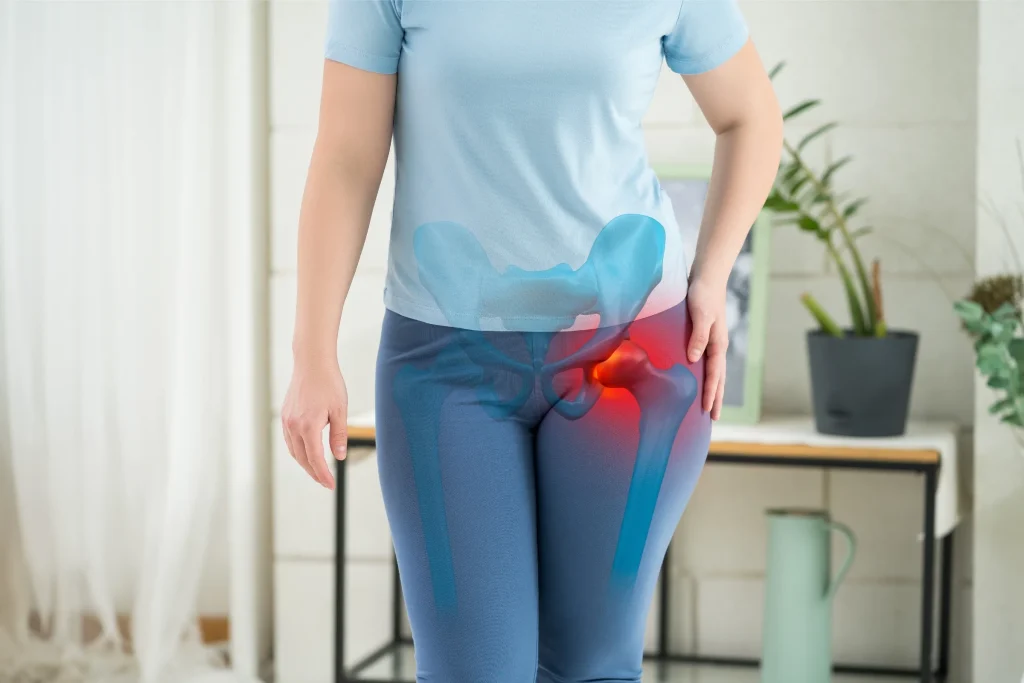
Hip pain is often a shared problem across the hip joint, the pelvis, and the low back rather than a fault in the hip alone. Chiropractic care works on that mechanical picture: restoring movement where the joints have stiffened, easing the muscle that guards around them, and giving you the movement that keeps the hip carrying you comfortably.
Hip pain reorganises your day quietly. The stairs become a decision, the long walk gets shortened, the way you get out of the car changes. People adapt around it for a long time before they mention it. Here is a plain-language look at what tends to cause it, how chiropractic care can help, and when it is something else.
What causes hip pain?
The hip is a deep, weight-bearing joint that works in close partnership with the pelvis and the low back, so trouble in any one of them tends to load the others. Much hip pain is mechanical: the joint stiffens and guards, the muscles around the pelvis pull unevenly, and the low back that shares the load stops moving well. Pain felt in the hip is sometimes actually coming from the low back, and pain felt in the groin or the outer thigh is often the hip itself.
The usual contributors we see in Dumont:
- Prolonged sitting, which shortens the hip flexors and stiffens the joint.
- A gait that changed after an old injury and quietly overloads one side.
- Weak or uneven muscles around the pelvis that leave the hip doing too much.
- Standing or walking work on hard floors, day after day.
- Age-related wear in the joint, which is common and does not always hurt.
Some hip pain needs a medical work-up first. Pain that followed a fall, a hip that cannot bear weight, pain with fever, or a sudden inability to move the leg needs to be seen medically rather than booked with us. Part of a good first visit is telling you which kind you have.
How does chiropractic care help with hip pain?
Chiropractic care works on the mechanics across the hip, the pelvis, and the low back. Gentle, specific adjustments restore movement to the joints that have stiffened and guarded, which changes how the hip loads and moves. Alongside the hands-on work, you get movement guidance so the hip keeps its range.
In practice, a course of care usually blends a few things:
- Adjustments to restore motion across the hip, pelvis, and low back, matched in force to your body.
- Soft-tissue work through the muscles of the hip and buttock that guard around the joint.
- Targeted movement to rebuild the strength and range the hip has lost.
- Practical changes to sitting, standing, and walking habits, so the same strain does not keep returning.
The first goal is to settle this episode and get the hip moving freely, then leave you with the movement to keep it.
What does care cost, and do you take insurance?
No referral is needed to book, and we will go over the costs with you up front so there are no surprises. Costs depend on your plan and what your hip needs, and we will always walk you through it in plain numbers first.
- No referral needed to book a first visit.
- We go over the costs with you before anything begins, so you know what to expect.
- Clear, up-front pricing if you are paying out of pocket.
We cannot promise a specific outcome or what your insurance will cover; every plan and every hip is different. What we can promise is an honest look and a straight answer.
About 1 in 4 people may develop symptomatic hip osteoarthritis over a lifetime, according to a long-running population study reported through the U.S. National Library of Medicine, which put the lifetime risk near 25%. Hip trouble is common, especially as the years add up, and much of it responds well to care focused on how the joint moves and loads.
Source: Peer-reviewed lifetime-risk study of symptomatic hip osteoarthritis, via the U.S. National Library of Medicine (PubMed Central). pmc.ncbi.nlm.nih.gov
Chiropractic care for Hip pain in Dumont
Chiropractic Care
Spinal Decompression
Shockwave Therapy
Hip pain FAQ: Dumont
For most people with common, mechanical hip pain, gentle chiropractic care has a strong safety record. The first visit includes a careful history and check so care is matched to your hip, and low-force options are used for a joint that is stiff or acutely sore. If something suggests you should be seen medically first, we will tell you.
Sometimes, and finding out is part of the point. Low-back problems can refer pain into the hip and buttock, while true hip-joint pain is more often felt in the groin or the outer thigh. Checking the hip, the pelvis, and the low back together is how we tell which is the source rather than just where you feel it.
Many people notice easier movement within the first few weeks, though a hip that has been stiff for a long time takes longer to loosen fully. It depends on what is driving it and how long it has been building. After your first visit we will give you a realistic window rather than a guess.
Often, yes. Wear in the joint shows up on the scans of many people, and how much it hurts depends heavily on how well the hip and the structures around it move. Care focused on restoring movement and sharing the load better can help a worn joint feel and function better, without pretending to reverse the wear itself.
Keep it gently moving rather than sitting still for long stretches, which stiffens a sore hip further. Short walks, easy position changes, and standing up regularly help many people. Ease off the one movement that sharply provokes it. If the pain followed a fall or the hip cannot bear weight, get it looked at medically before booking with us.
The stairs do not have to be a decision.
Or call us directly: (201) 387-7463
You might also look at

Back pain
The low back that shares the load with the hip.

Knee pain
The knee that takes the strain when the hip stops moving well.

Sciatica & leg pain
When the nerve is irritated on its way through the hip.